
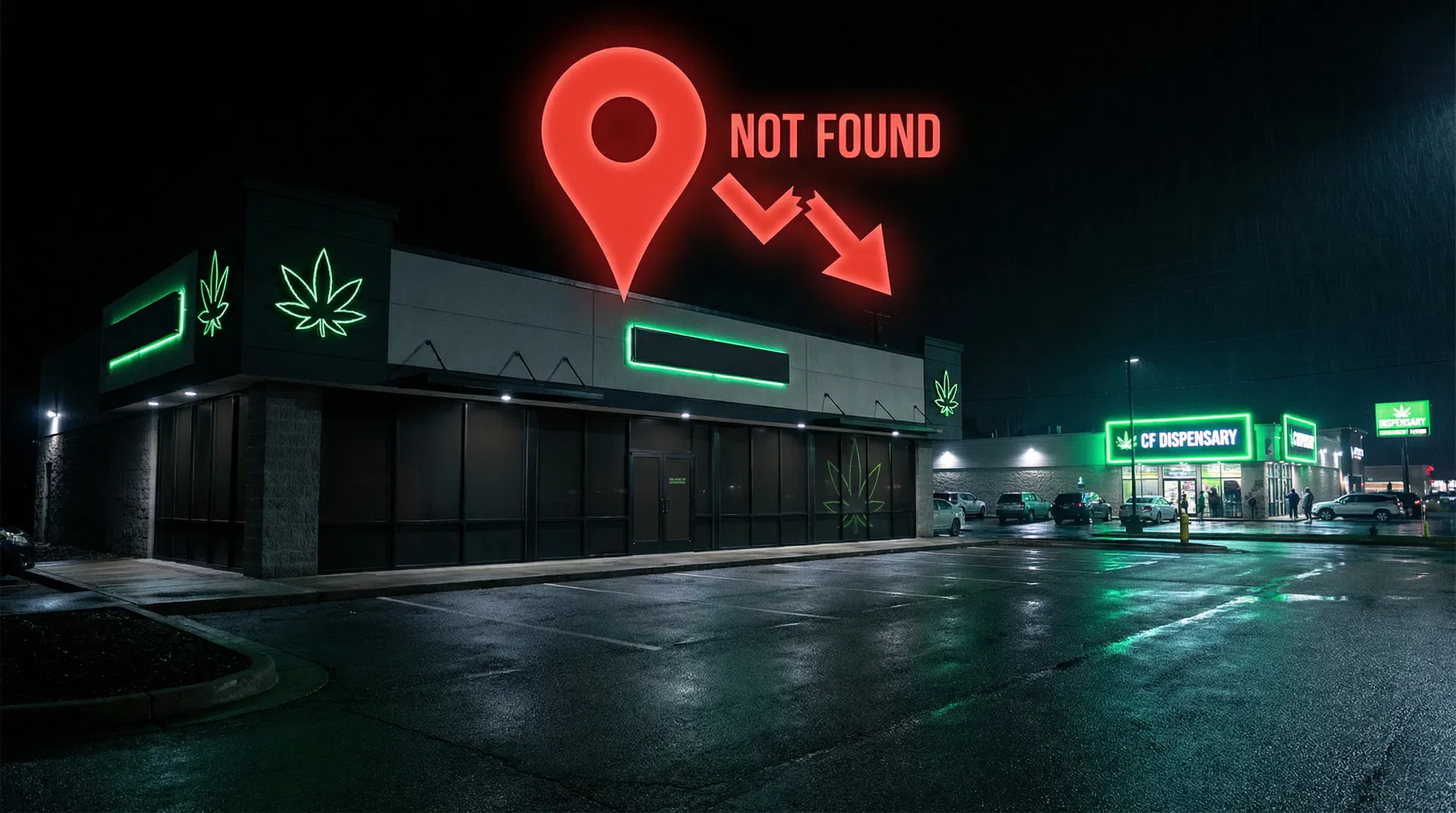
Why Dispensaries Fail at Local SEO (And How to Fix It)
Key Takeaways
Local SEO is the single most profitable marketing channel for dispensaries and yet 80% of shops treat it like an afterthought while handing market share to competitors who get it
Your Google Business Profile is not a set-it-and-forget-it asset but a living piece of real estate that requires weekly attention to outrank shops selling the same flower, edibles, and concentrates you carry
Most dispensaries fail at local SEO because they copy what does not work instead of studying what the top three shops in their market are actually doing differently
Citations, reviews, and location-specific content are the three pillars that separate dispensaries dominating local pack results from dispensaries invisible to customers searching right now
The fix is not complicated but it requires consistent execution, and that is exactly where your competition drops the ball
The Dispensary Getting All Your Customers Is Not Better Than You
Somewhere in your city, there is a dispensary pulling customers who should be yours. Customers searching for flower near me. Customers looking for edibles in your neighborhood. Customers ready to drop money on pre-rolls, vape cartridges, concentrates, and every accessory from grinders to rolling papers.
They found someone. That someone was not you.
Here is what burns: that dispensary is not better than you. Their bud is not more fire. Their budtenders are not more knowledgeable about indica versus sativa effects or terpene profiles that hit different. Their selection of gummies, chocolates, tinctures, and topicals is probably comparable to yours.
The only difference? They show up when people search. You do not.
That is local SEO. And you are losing at it every single day you ignore how it actually works.
Why Local SEO Matters More for Dispensaries Than Almost Any Other Business
Think about how your customers find you. Not the ones who already know your name. The new ones. The tourists visiting your city looking for weed. The people who just moved to the neighborhood and need a new spot. The medical patients searching for specific strains or CBD products that help with their conditions.
They search. They type some variation of dispensary near me, weed shop in [neighborhood], cannabis store open now, or where to buy edibles in [city]. And Google decides who they see.
Not the dispensary with the best flower. Not the shop with the friendliest staff. Not the store with the widest selection of bongs, dab rigs, and glass pieces. Google shows them whoever has done the work to rank.
Local search is different from regular SEO. When someone searches with local intent, Google serves up the Local Pack. Those three businesses with the map right at the top of results. Above the organic links. Above the articles. Above everything except paid ads, which cannabis businesses cannot even run on Google anyway.
If you are in that Local Pack, you get clicks. You get calls. You get direction requests from people ready to drive to your shop and spend money on quarters, eighths, ounces, and everything else you stock.
If you are not in that Local Pack, you are invisible to the majority of searchers who never scroll past those top three results.
This is not a nice-to-have. For dispensaries specifically, local SEO is the primary digital customer acquisition channel that actually works at scale without getting your ad accounts banned.
The Five Reasons Most Dispensaries Fail at Local SEO
After auditing dozens of dispensary websites and Google Business Profiles, the patterns are painfully consistent. The shops struggling to rank are making the same mistakes over and over. Not because they are stupid. Because nobody told them what actually matters.
Reason One: Ghost Town Google Business Profiles
Your Google Business Profile is not a digital business card you fill out once and forget. It is the single most important asset you have for local search. And most dispensaries treat it like a chore they completed during their grand opening and never touched again.
Look at your profile right now. When was the last post? When did you upload a fresh photo? Are your hours accurate? Is your description filled with specific mentions of the products you actually sell, or is it generic fluff that could describe any cannabis store anywhere?
Google rewards activity. A profile that gets updated weekly with new strain arrivals, edible restocks, and photos of your actual inventory signals to Google that this is a living, thriving business worth recommending. A profile that has not been touched in six months signals abandonment.
Your competitor updates their GBP every few days. They post about the new live resin batch that just dropped. They add photos of their fresh flower selection. They respond to every review within 24 hours. Google sees engagement. Google rewards it.
Reason Two: Review Anemia
Reviews are not vanity metrics. They are a ranking factor. One of the biggest for local search. And the math is simple: a dispensary with 400 reviews and a 4.6 rating will almost always outrank a dispensary with 50 reviews and a 4.9 rating.
Volume matters. Velocity matters. A steady stream of new reviews tells Google that people keep coming to your shop and keep having experiences worth writing about.
Most dispensaries have no system for generating reviews. They hope customers will do it on their own. Hope is not a strategy. Your competitor asks every single customer who walks out with an eighth of their best gas to leave a review. They have QR codes at the register. They send follow-up texts. They made review generation part of their daily operations.
You are hoping. They are executing. The scoreboard reflects it.
Reason Three: Missing Location Pages
Your homepage cannot rank for every neighborhood search in your market. It is physically impossible. Google needs dedicated pages that match specific search intent.
When someone searches for dispensary in [specific neighborhood], they want results relevant to that neighborhood. A homepage that says "serving the greater [city] area" does not cut it. A dedicated page targeting that specific neighborhood, with unique content about serving that community, has a chance.
Most dispensaries have one location page at best. The shops dominating local search have pages for every neighborhood they serve. Dispensary in Koreatown. Cannabis store in Silver Lake. Weed shop near LAX. Each page targeting different geographic keywords. Each page ranking for different searches. Each page pulling in customers the single-page competitors never reach.
Reason Four: Citation Chaos
Citations are mentions of your business name, address, and phone number across the web. Yelp, Weedmaps, Leafly, Apple Maps, Bing, and hundreds of directories you have never heard of. Google uses these to verify that your business is real, legitimate, and actually located where you claim.
When your citations are inconsistent, Google gets confused. One listing says 420 Main Street. Another says 420 Main St. Your old phone number is still on Weedmaps from before you switched providers. Your hours are wrong on Yelp. Your business name has a slight variation somewhere.
This inconsistency tells Google your information cannot be trusted. And if Google cannot trust your information, Google is not going to confidently recommend you to searchers looking for a reliable dispensary nearby.
Reason Five: Zero Local Content
Your blog, if you even have one, is filled with generic cannabis content. "Benefits of CBD." "Indica vs Sativa Explained." "What to Expect at Your First Dispensary Visit."
Congratulations. You now have the same content as every other cannabis website on the internet. Google has seen this written ten thousand times. It does not need your version. It is not going to rank your version.
Local content is different. Content that ties your dispensary to your specific market. Best dispensary in [city] for medical patients. Where to find live rosin in [neighborhood]. Guide to cannabis for [city] tourists. This content targets searches with local intent and builds your authority as the go-to shop for your specific area.
Generic content competes globally against major publications. Local content competes in your market against the handful of dispensaries who bothered to create it. The competition is not even close.
What the Top Ranking Dispensaries Do Differently
Pull up Google right now. Search for dispensary in your city. Look at the three shops in the Local Pack. Then look at their profiles. Look at their websites. Look at their review counts.
You will notice patterns immediately.
Active GBPs: Recent posts. Fresh photos. Updated product catalogs. Responses to every review. Signs of life everywhere.
Review volume: Hundreds of reviews. Sometimes over a thousand. A steady stream of new ones coming in every week. Not just quantity but recency.
Location-specific pages: Dedicated landing pages for neighborhoods, nearby landmarks, and local search variations. Not just one generic location page.
Consistent citations: Their name, address, and phone number match exactly across every platform. No confusion. No conflicts.
Local content: Blog posts, guides, and pages that target their specific market. Content that no national cannabis website would ever create because it only matters locally.
These shops did not stumble into the top positions. They earned them through consistent execution of the basics. Nothing complicated. Nothing requiring a massive budget. Just work that compounds over time.
The Fix Is Simple But Not Easy
Here is the brutal truth about fixing your local SEO. The strategy is not complicated. Any agency or consultant who makes this sound mysterious is probably hiding the fact that they do not have a system.
The fix looks like this:
Audit your Google Business Profile: Fill out every field completely. Add all relevant categories including recreational cannabis store, medical marijuana dispensary, and anything else that applies. Write a description packed with the products you actually sell: flower, edibles, concentrates, vapes, pre-rolls, tinctures, topicals, accessories, glass, and papers.
Establish a posting schedule: Minimum twice per week. New strain arrivals. Edible restocks. Concentrate drops. Photos of your actual inventory, not stock images. Show Google and customers that your business is alive.
Build a review generation system: Train your budtenders to ask for reviews after positive interactions. Add QR codes linking directly to your Google review page. Send follow-up texts to customers who opted in. Set a weekly target and track it like any other business metric.
Create location pages: One for each neighborhood you serve. Unique content on each. Target specific geographic keywords. Link them properly from your main navigation.
Clean up citations: Audit every major directory. Make your name, address, and phone number identical everywhere. Claim and verify listings you do not control. Add your business to platforms you are missing, especially Weedmaps, Leafly, and other cannabis-specific directories.
Produce local content: Write about your specific market. Feature local strains. Create guides for visitors to your city. Tie your dispensary to the community you serve.
None of this requires a massive budget. None of it requires technical genius. It requires consistency. It requires actually doing the work instead of talking about doing the work.
And that is where most dispensaries fail. Not because they do not know what to do. Because they do not do it consistently. They start strong for two weeks. Then operations get busy. Then a new product launch takes priority. Then three months pass and nothing has been updated.
Your competitors have systems. Your competitors have accountability. Your competitors do the boring work every single week while you are waiting for some marketing magic bullet that does not exist.
What Happens When You Actually Execute
Imagine your dispensary in six months. Your Google Business Profile has been updated 50 times with new products, fresh photos, and engaged responses to every review. Your review count doubled from 120 to 280. You built location pages for eight neighborhoods and three of them are already ranking. Your citations are clean and consistent everywhere.
Now someone searches for dispensary near me while sitting in their car two miles from your shop.
They click. They call. They drive to your shop. They buy an ounce of your best flower, a pack of gummies for the weekend, and a new grinder because theirs is getting dull.
That customer was going to spend that money somewhere. They chose you because Google chose you. And Google chose you because you did the work.
Multiply that by every search, every day, for the rest of the year. That is what consistent local SEO execution produces. Not overnight success. Compounding returns that build on themselves month after month.
The Cost of Continued Failure
Every day your local SEO stays broken is another day of lost customers. Not hypothetical customers. Real people searching right now for exactly what you sell in exactly the area you serve.
They searched. They found your competitor. They spent their money there. They might even become regulars there. Lifetime customers you will never have because you were not visible when they were looking.
The shops dominating your local market right now did not get there by accident. They built systems. They executed consistently. They treated local SEO like the revenue driver it actually is instead of a checkbox they completed during their soft opening.
You can keep doing what you have been doing. Keep hoping your product quality speaks for itself. Keep believing that word of mouth will somehow overcome your invisibility in search results.
Or you can start the work today. Fix your GBP this week. Launch your review system next week. Build your first location page the week after. Stack small wins until they compound into dominance.
Your competitors are not waiting for you to catch up. Every day you delay is another day they build walls you will eventually have to climb.
The customers are searching right now. The only question is whether they find you.
Frequently Asked Questions
What is the most important factor for dispensary local SEO?
Google Business Profile optimization combined with review quantity and velocity. A fully optimized GBP with hundreds of reviews will outrank a neglected profile almost every time, regardless of website quality or product selection. Start there before investing in anything else.
How many reviews does a dispensary need to rank in the Local Pack?
Enough to be competitive with the top-ranking dispensaries in your specific market. If the top three shops have 300, 450, and 500 reviews, and you have 75, that gap is hurting you. Focus on closing the gap with consistent weekly review generation rather than a magic number.
Do location pages actually help dispensaries rank locally?
Yes. Your homepage cannot rank for every neighborhood variation. Dedicated pages targeting specific geographic searches give Google something to show for those queries. Dispensaries with multiple optimized location pages capture significantly more local traffic than those relying on a single page.
How often should a dispensary update their Google Business Profile?
At minimum twice per week with posts about new products, strain arrivals, and inventory updates. Upload fresh photos weekly. Respond to every review within 48 hours. Treat your GBP like a social media account that directly impacts your revenue.
What kind of local content should a dispensary create?
Content that ties your business to your specific market. Guides for visitors to your city, features on locally popular strains, neighborhood-specific landing pages, and content targeting searches like "best dispensary in [city] for [specific need]." Avoid generic cannabis content that could appear on any website anywhere.
Can a dispensary fix local SEO problems without hiring an agency?
Yes, especially for GBP optimization, review generation, and basic content creation. These require consistency more than technical expertise. Technical fixes like citation cleanup and website optimization may benefit from professional help, but the fundamentals can be handled internally with dedicated effort.